
We collaborated with the Après-Minuit studio on the technical aspects of their installation, Perspective, during the Mutek Digital Village. The installation uses our emPeek product to detect the position and proximity of people or to reveal the image on the disc. For this project, we supported the development of the IT infrastructure and deployed our emPeek and emMap (based on our videomapping software Splash) products.
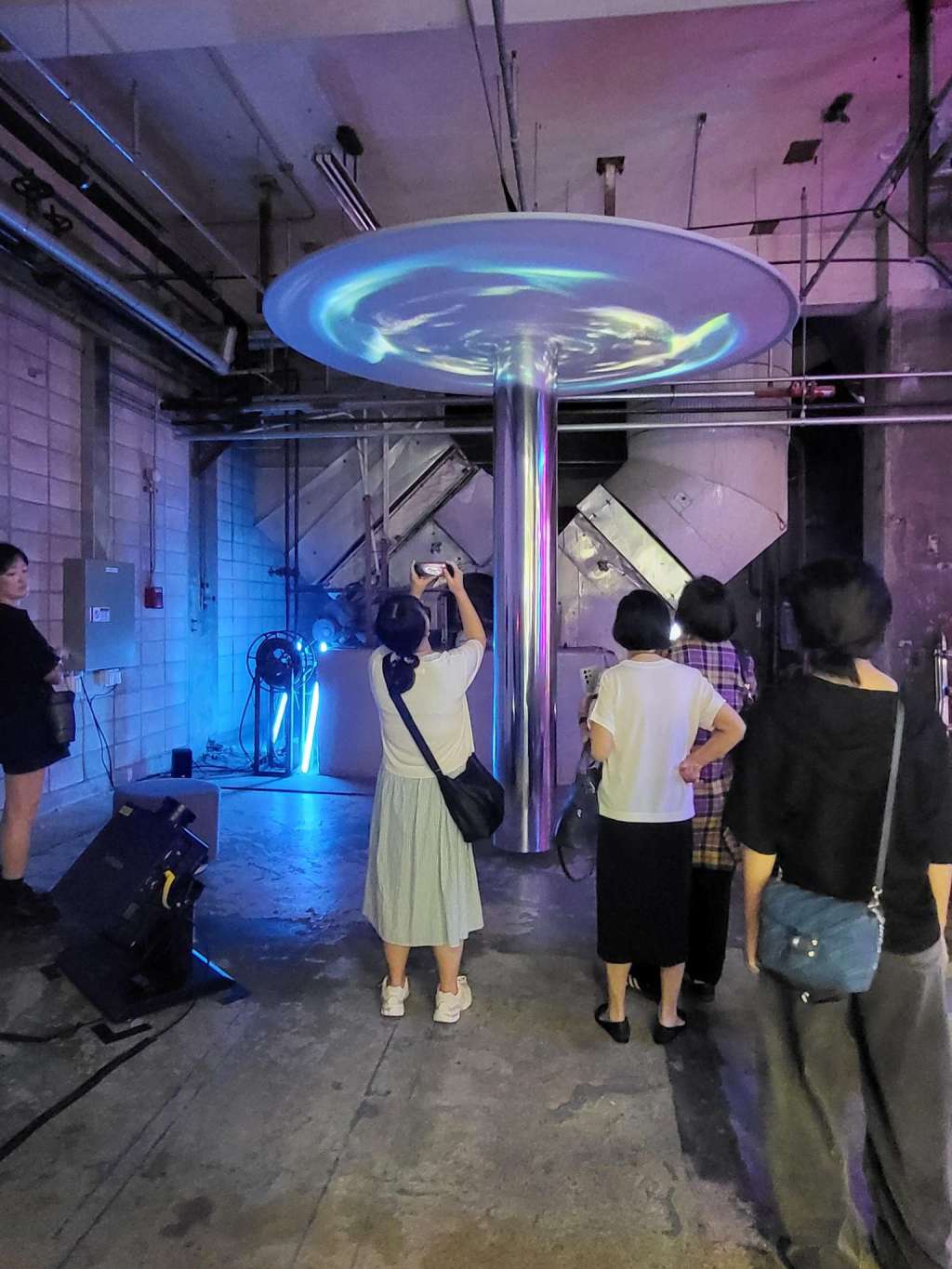
Perspective from Après Minuit
Luc Courchesne’s Visitor project uses our emListen solution and its low-latency speech recognition capabilities. The installation uses voice commands to navigate through a series of 360-degree videos filmed in the Japanese countryside in the early 2000s. Our emListen product hosts all of the installation’s software and will be deployed this month at the ZKM in Karlsruhe as part of the permanent exhibition.
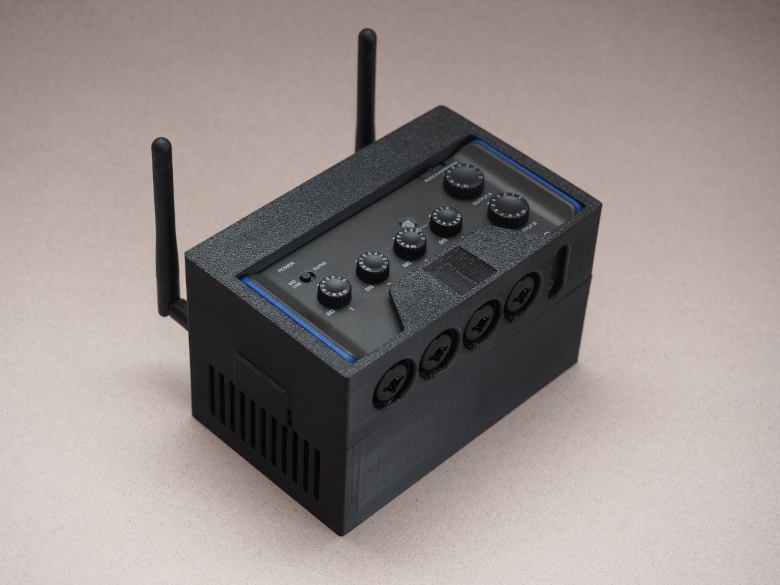
emListen, used for the Visitor project's IT infrastructure
Want to add interactivity to your digital experience through sound and by tracking audience movements? Designing interactive digital experiences for groups of people remains an ambitious challenge today: it’s rare to find technologies that are affordable, robust, and easy to integrate with narrative concepts. Today, other factors have compounded the challenge: rising IT hardware costs and the need to reduce the hardware and energy footprint.
To help you navigate your technology choices, here is a list of risks we have observed in several projects.
Cloud services can be fragile and ephemeral. In the event of a loss of Internet access, an update, or the service becoming unavailable, your digital experience immediately loses a feature, and sometimes without prior notice.
Technologies are sometime ill-suited for digital experience projects. How can the technology be deployed in different types of venues? How long does it take to deploy it? How long does it take to integrate it with the experience’s content?
Sustainable industrial solutions are rare. Are the technologies used repairable? Will you be able to replicate other similar experiences? Will you be able to archive it?
The rising cost of IT makes experimentation difficult. How can you choose your IT equipment before you’ve had a chance to experiment with it?
At the Lab148 cooperative, we believe it’s more important than ever to provide responsible technologies for digital experimentation, and that’s what drives us every day.
Our technologies offer advanced features for audio-based interactivity (emListen) and the detection of people and object’s movements (emPeek). They are built and tested using edge computing, which reduces costs, energy consumption, and hardware requirements. They are standalone and do not require an Internet connection: they operate on-site.
We’ll be on-site with our demos at MTL Connecte on September 15, and we’ll also be participating in the panel discussion “Digital Sovereignty in the Digital Experience Production Sector.” We look forward to seeing you there!
Also you could have met us at All In, where we did our best to bring light and local machine learning in our discussions!
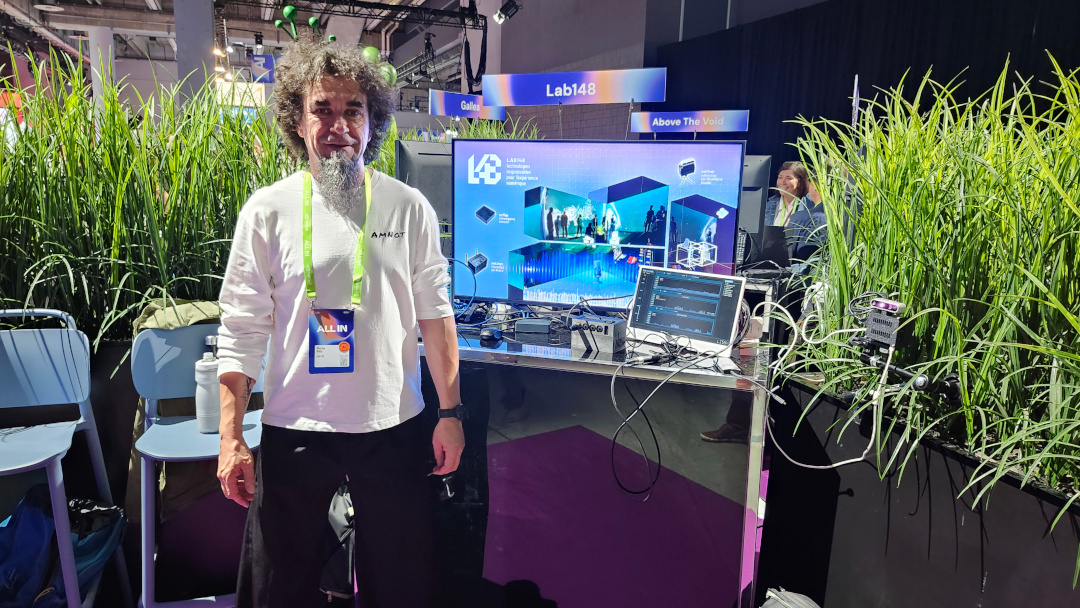
Michał seta is ready to showcase our demonstrations during All In
Montreal is currently hosting the 35th CIRIEC International Congress on collective enterprises. Radio-Canada is covering the event on its program Tout un matin.
And what about us? Why form a cooperative to develop innovative technologies? We believe that the products and services we develop are primarily intended for users, and that it’s up to them to take control of their tools.
Being a worker cooperative means providing a sustainable framework that promotes responsible technologies that serve users, and that is the result of the collective thought and work of its worker-members. Under a cooperative legal framework, decision-making remains independent, and our priorities continue to reflect our values: our products are designed to support collective digital experiences, our software is free and open-source, and our hardware is developed with a minimal material and energy footprint.
You can:
Request a meeting to discuss how our solutions can be integrated into your project: contact@lab148.ca
Rent our spaces: https://lab148.ca/en/products/
Make a donation to support the development of Splash, our open-source video mapping software: https://opencollective.com/splash
Spread the word about our solutions!
